Live ·
RevForge
An Android app that synthesises your car's engine sound live from its OBD-II data.
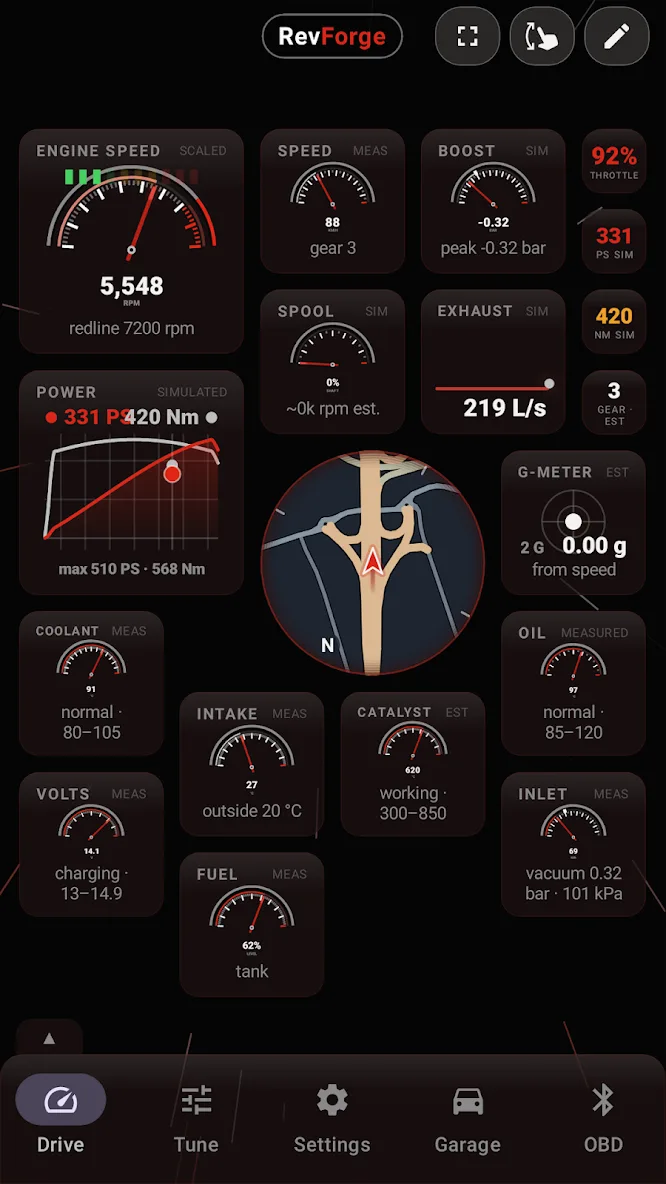
RevForge turns the revs and load it reads over a Bluetooth OBD-II adapter into an engine sound on the phone, synthesised as the car drives rather than played from recordings. A dashboard the driver arranges follows the car, a minimap draws the real streets around it, and trips can be recorded. Started on 18 August 2026, on Google Play since 8 September.
Main functions
- Live engine sound: a C++ DSP core on Oboe renders the voice from rpm, throttle and load as they arrive over OBD-II, with no samples involved.
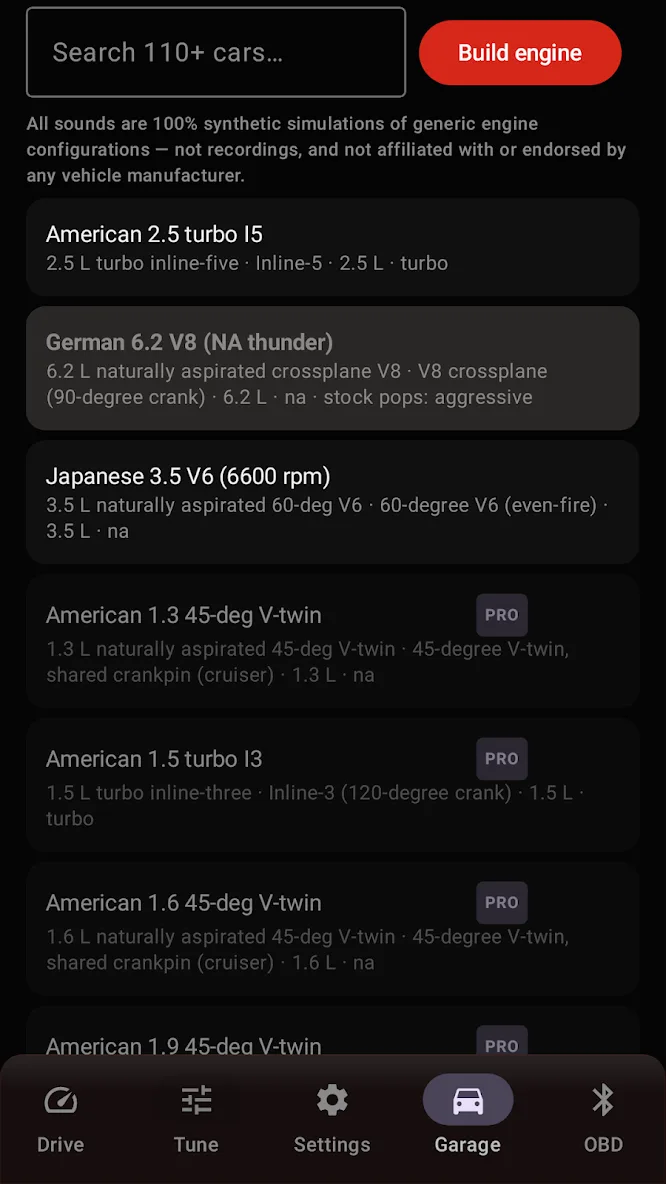
- 139 engine configurations across 35 layouts, from a single cylinder to a W16, plus rotary, electric motor and gas turbine models.
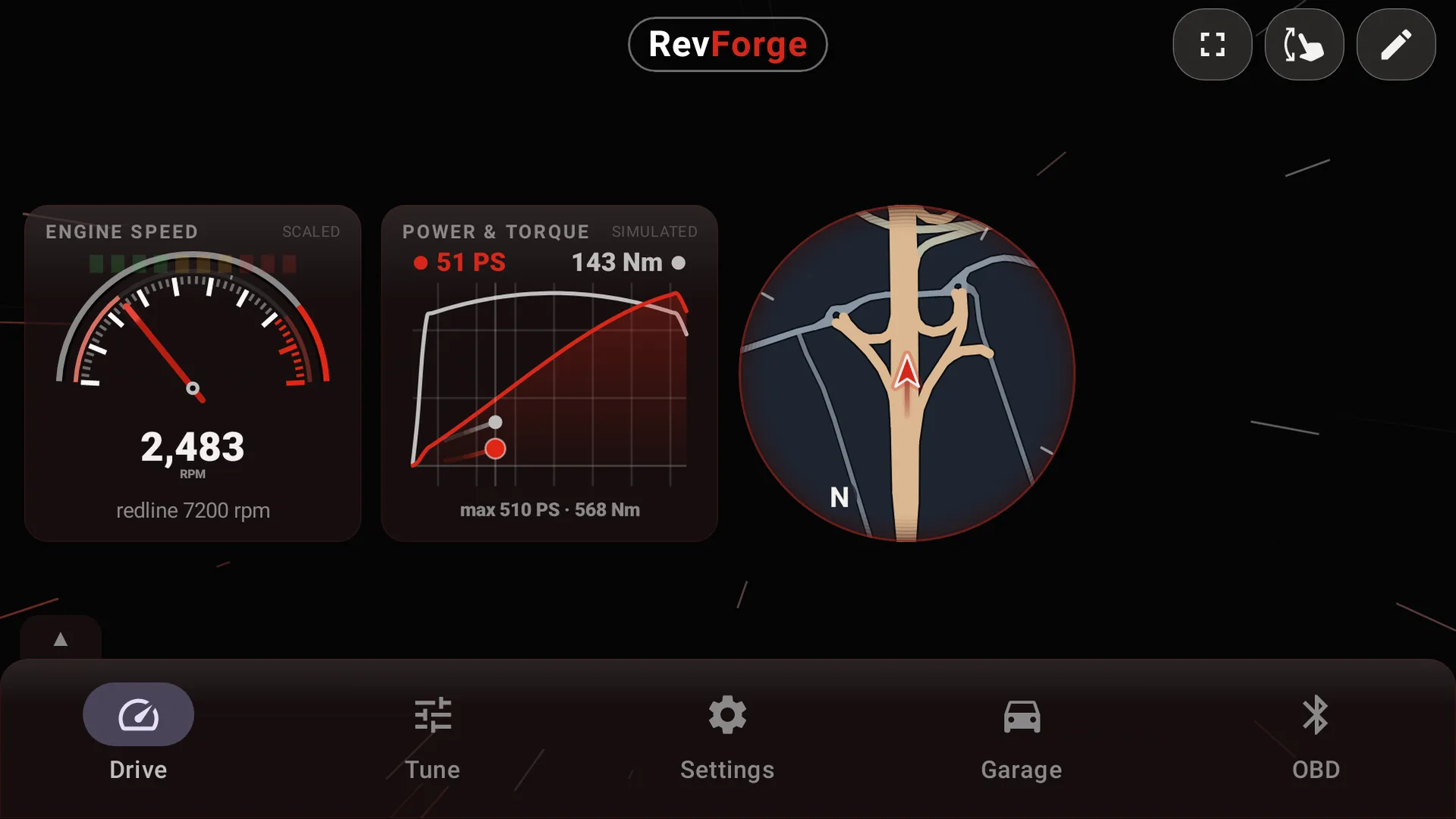
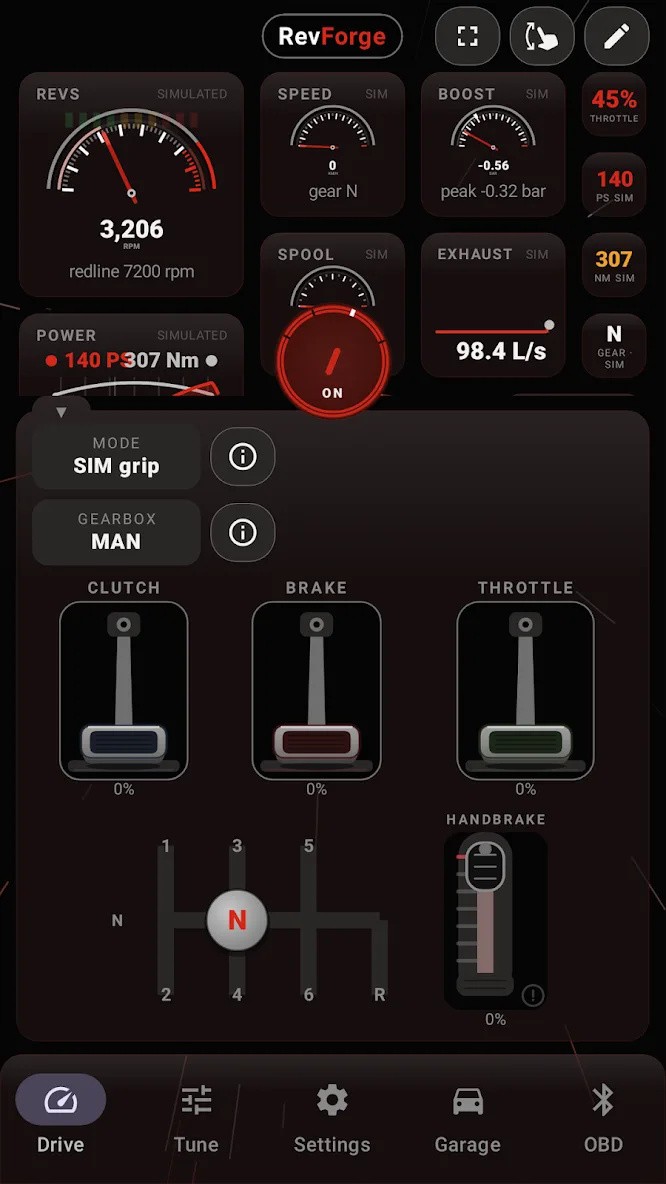
- A dashboard of 35 modules and 18 themes the driver arranges: tach with shift lights, boost, the power curve, and gauges read from the car.
- A minimap that draws the real streets around the car from OpenStreetMap and places it on the road.
- Trip recording, switched on by the driver and running in the foreground, with shareable result cards; trips and laps are marked beta in the app.
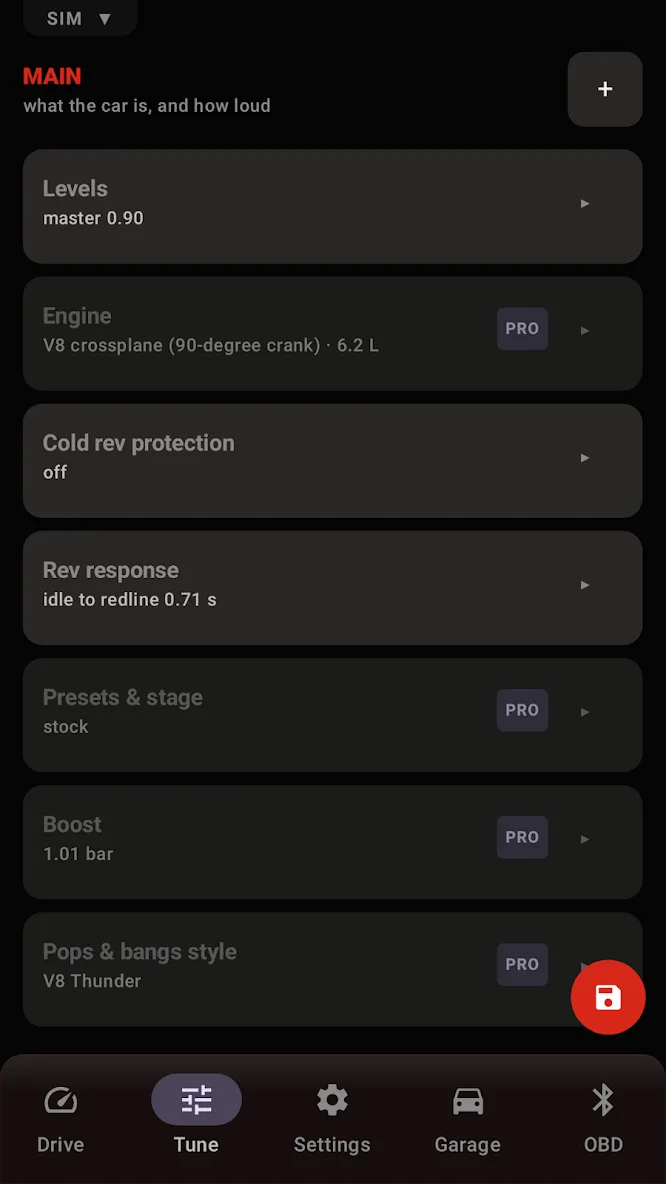
- A tuning tree and a 4-band EQ on each of the 19 voices; Authentic keeps the car's real configuration, Custom lets you build your own.
- Keeps playing in the background as a foreground service with media controls.
- Privacy by construction: no account, no ads, no analytics. The one network request is the optional street fetch, which names a map square; everything else stays on the phone until you share a result card.
- 2026-09-08on Google Play since
- 139engine configurations, 35 layouts
- 1,920JVM tests and 21 DSP harnesses, run 2026-09-19
- $12.99Pro unlock, one payment (US Play price, October 2026)
Built with: Kotlin · Jetpack Compose · C++20 DSP core · Oboe · ELM327 OBD-II over Bluetooth · Google Play Billing · Play Developer API
2026-10 · the next branch
The next branch is yours.
Tell me what people order or book from you today, and what should run without you tomorrow. A free mockup before any money moves, a fixed price for the outcome, and the person who built it still answers the phone after launch.